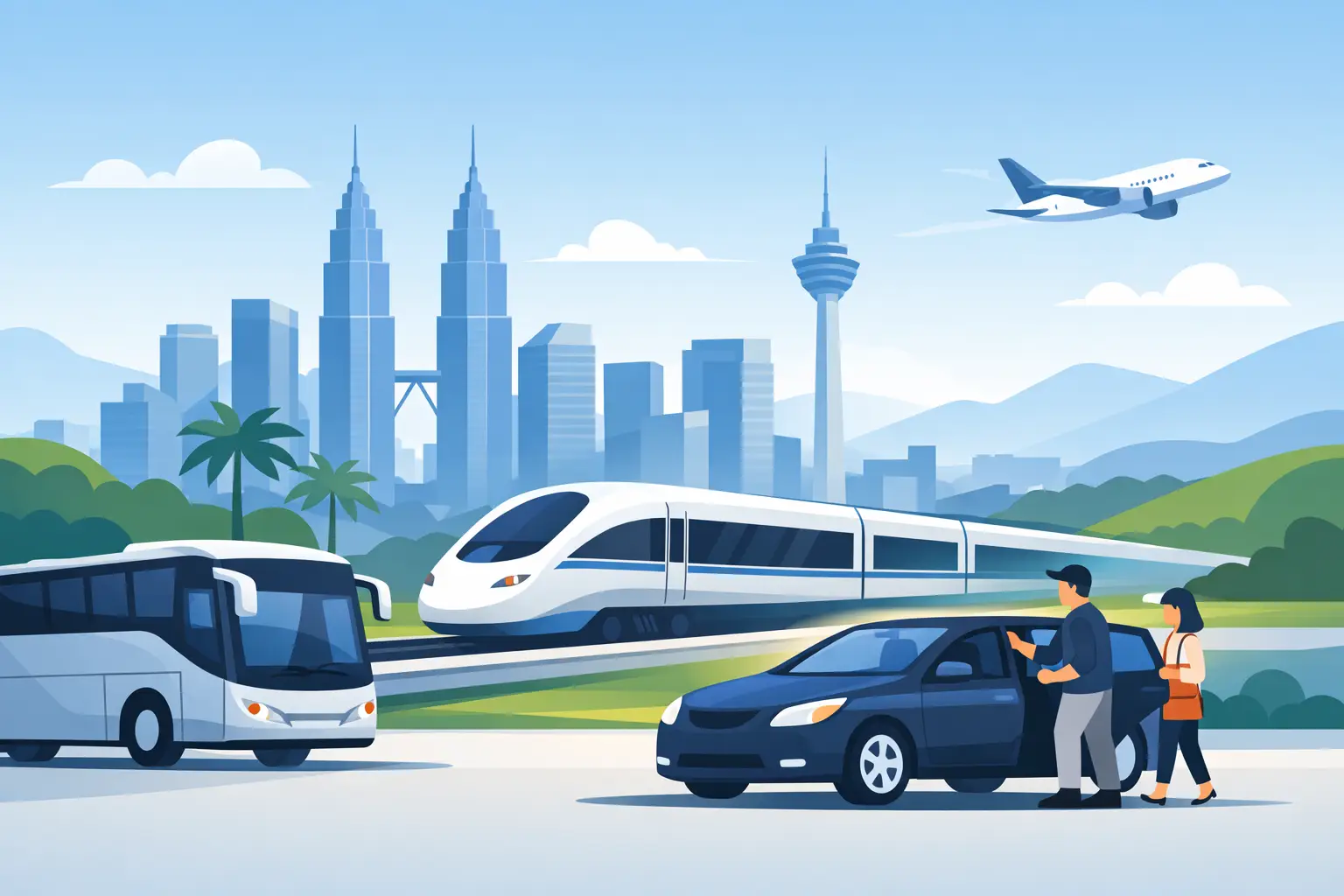
A 3-hour trip across Malaysia can feel easy or unnecessarily stressful, and the difference usually comes down to the ride you choose before you leave. When travelers compare the best Malaysia intercity ride options, they are usually trying to balance four things at once: cost, comfort, timing, and how much uncertainty they are willing to tolerate on travel day.
That matters more than it first appears. A solo business traveler going from Kuala Lumpur to Penang has very different needs from a family landing at KLIA with strollers and suitcases, or a small group heading to Malacca for the weekend. There is no single best option for every trip. There is, however, a best fit for the way you travel.
Best Malaysia intercity ride options for different travelers
Malaysia gives travelers several workable ways to move between cities, but each comes with trade-offs. If your priority is the lowest possible fare, public transport will often win. If your priority is door-to-door convenience, a pre-booked private ride is usually the strongest choice. If your plans may shift, flexibility becomes just as important as price.
The key is to stop thinking about transport as one line item and start thinking about the full travel experience. A cheaper ride that still requires extra transfers, waiting time, luggage handling, and uncertain pickup arrangements may not actually be the better value.
Private intercity rides
A private intercity ride is usually the most direct option. You are picked up at your hotel, home, airport, or meeting point and driven straight to your destination without needing to switch vehicles. For travelers carrying luggage, traveling with children, arriving on a late flight, or moving in a group, that simplicity matters.
This option is especially useful for routes where travelers want to avoid station transfers or unfamiliar terminals. It also gives more control over departure times. Instead of planning your day around a train or bus schedule, you leave when it suits your itinerary.
The trade-off is cost. For one passenger on a budget, a private ride will usually cost more than a bus or train seat. But for families or small groups, the per-person cost can become much more reasonable, especially once you factor in taxi transfers to and from terminals. This is where fixed-rate services stand out. Knowing the fare in advance removes the uncertainty that often comes with on-demand transport pricing.
Bus services between major cities
Buses remain a common and economical way to travel between major destinations in Malaysia. They work well for travelers who are budget-conscious, carry light luggage, and do not mind following a timetable. On many established routes, bus coverage is broad and fares are accessible.
Still, a bus is not always the most convenient option. You need to get to the terminal, wait for departure, and then arrange the final leg after arrival. Travel times can also vary with traffic and route stops. If your destination is not close to the drop-off point, the total journey can stretch longer than expected.
For solo travelers with flexible schedules, buses can make sense. For anyone trying to keep a trip smooth and predictable, especially after a long flight, the savings may not be worth the added friction.
Train travel
Train travel can be a comfortable middle ground on certain routes. It offers a more structured experience than a bus and can feel less tiring on longer journeys. Travelers who prefer stations to road terminals, or who simply want a steadier ride, often find trains appealing.
The limitation is coverage. Not every destination matches cleanly with train access, and even when it does, you may still need additional transport on both ends. That means train travel works best when your starting point and final destination align well with the rail network.
For city-to-city travelers with simple luggage and a fixed schedule, trains can be practical. For airport arrivals, families, or groups with multiple bags, the handoff between train and final transfer may be the part that turns a manageable trip into a tiring one.
Ride-hailing apps and standard taxis
Ride-hailing can be useful for shorter city trips, but for longer intercity travel, it becomes more variable. Availability may change by time of day, route, and location. Fare consistency can also be an issue, especially during peak demand periods or bad weather.
Standard taxis can sometimes cover intercity journeys, but this is rarely the most reassuring choice for travelers who want confirmed pricing and clear service expectations in advance. For a longer route, certainty matters. You do not want to be negotiating fare expectations or wondering whether the driver is willing to take the trip when you are already pressed for time.
This is why many travelers treat ride-hailing and taxis as backup options rather than primary plans for intercity travel. They can work, but they are less dependable when the journey is longer, the stakes are higher, and timing matters.
How to choose among the best Malaysia intercity ride options
The right choice depends less on the route alone and more on the type of trip you are taking. If you are landing at KLIA or KLIA2 and heading directly to another city, the most practical option is often a pre-booked private transfer. Airport arrivals come with enough moving parts already. Flight delays, baggage collection, and arrival coordination are easier to manage when the pickup is already arranged.
If you are traveling with family, a private ride usually offers the best balance of comfort and simplicity. You can keep everyone together, avoid multiple transfers, and choose a vehicle size that fits both passengers and luggage properly. That is a real advantage on longer drives.
If you are traveling solo and want the lowest fare possible, bus or train may be a better fit. But it only stays the best option if your schedule is flexible and your final destination is easy to reach from the arrival point. Once extra transfers enter the picture, convenience starts to carry more weight.
Business travelers often care most about punctuality and control. For them, a private ride tends to be the stronger choice because departure times are fixed around their plans, not around a transport operator's timetable. There is also less risk of delay caused by missed connections or terminal confusion.
Where private transport makes the biggest difference
Private intercity transport is not necessary for every route, but there are clear cases where it delivers better value than the headline price may suggest. One is airport-to-city or airport-to-resort travel. After a flight, especially for international visitors, door-to-door pickup is simply easier than piecing together the next leg.
Another is group travel. An MPV or van can often move several passengers together more efficiently than splitting into separate vehicles or coordinating public transport. It also creates a cleaner start and end to the trip, with everyone arriving at the same time.
It is also the better fit for travelers heading to destinations where comfort matters as much as arrival, such as hill resorts, heritage towns, or day-trip locations outside the busiest city corridors. On those routes, a professional driver, fixed pricing, and a properly matched vehicle can make the journey feel organized instead of improvised.
That is the logic behind services like Cab2Travel. The value is not just the ride itself. It is the combination of clear rates, advance booking, door-to-door service, and vehicle options that suit solo travelers, families, and small groups without the uncertainty of last-minute transport decisions.
What to look for before you book
Not all intercity rides are equal, even when the route is the same. Before booking, check whether the price is fixed, whether pickup is door-to-door, and whether the operator can handle flight timing if you are arriving by air. These are not minor details. They are often the difference between a smooth transfer and an avoidable delay.
It also helps to match the vehicle to the trip, not just the passenger count. Luggage space matters. So does comfort on longer drives. A compact ride may look sufficient on paper but feel cramped halfway through the journey.
Professionalism matters too. For intercity travel, you want a driver and service structure that treat timing seriously. Clean vehicles, clear confirmation, and dependable communication are basic expectations, not extras.
The best transport choice is usually the one that removes the most uncertainty for a reasonable cost. If your trip is simple, public transport may do the job. If your trip involves luggage, family members, airport coordination, or a tight schedule, paying for certainty is often the smarter decision.
A good intercity ride should let you focus on where you are going, not on what might go wrong on the way.