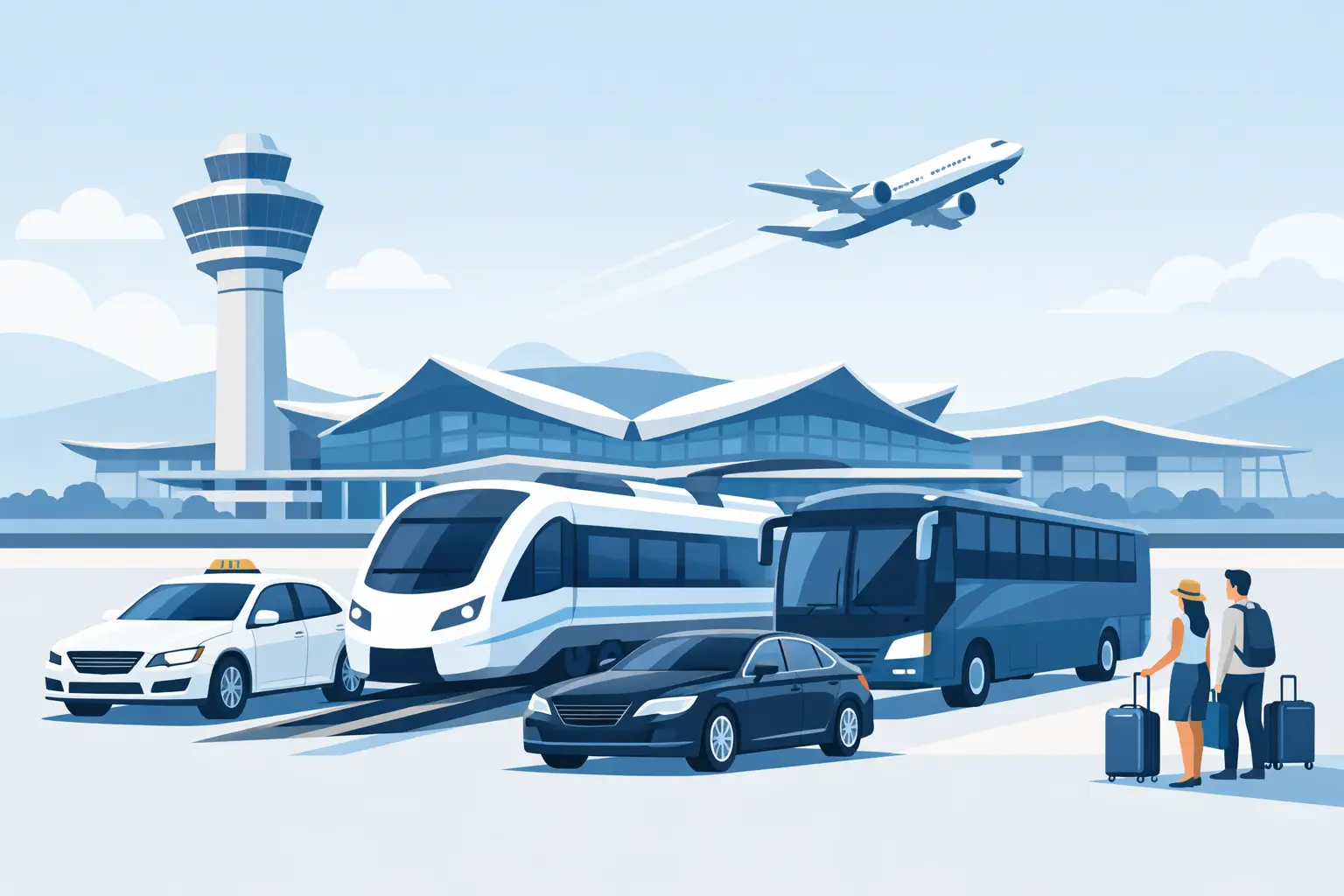
Landing at KLIA or KLIA2 after a long flight, the last thing most travelers want is uncertainty. Kuala Lumpur airport transport can be straightforward, but the right choice depends on when you land, how much luggage you have, who is traveling with you, and whether you value the lowest fare or the most predictable ride.
For some travelers, speed matters most. For others, it is price, comfort, or the reassurance of knowing a driver will already be waiting. That is why airport transport in Kuala Lumpur is not really one-size-fits-all. The best option for a solo traveler heading into the city center is often different from the best option for a family with strollers or a business traveler arriving late at night.
What to know before choosing Kuala Lumpur airport transport
KLIA and KLIA2 serve different airlines but sit within the same airport area, and that distinction matters when you book transport. Some services handle both terminals well, while others can become less convenient if pickup details are unclear or if a traveler assumes both terminals work the same way.
The trip into central Kuala Lumpur usually takes around 45 minutes to over an hour by road, depending on traffic, weather, and time of day. That range is the first trade-off to understand. A road transfer gives you door-to-door convenience, but travel time can vary. Rail is more time-stable, but you still need another ride once you reach the city.
If you are arriving with checked bags, traveling with children, or heading somewhere outside the central business district, total journey friction matters more than headline travel time. A transfer that looks cheaper at first can become less convenient once you add queue times, extra handling, or a second trip from the station to your hotel.
The main Kuala Lumpur airport transport choices
Private airport transfer
A pre-booked private transfer is the most direct option for travelers who want certainty. You are picked up at the airport and driven straight to your hotel, residence, or meeting point. For many people, the value is not only comfort. It is the fixed rate, the clear booking confirmation, and the fact that you are not negotiating price or looking for a ride after landing.
This option is especially practical for families, groups, travelers with several suitcases, and anyone arriving at odd hours. Flight monitoring also makes a difference. If your arrival is delayed, a properly managed private transfer can adjust pickup timing without turning the situation into a series of calls and messages.
The trade-off is simple. A private ride can cost more than public transport for one passenger, but it often becomes more cost-effective for two or more travelers sharing the vehicle. It also saves time and reduces uncertainty, which matters when you are tired or on a schedule.
Taxi service
Taxis remain a familiar airport option and can work well for travelers who want immediate road transport without pre-booking. They are easy to understand in principle: get in, head to your destination, and pay at the end or through the airport taxi system, depending on how the service is arranged.
But the experience can vary more than many travelers expect. Wait times may change during busy periods, and pricing may feel less predictable to visitors who are unfamiliar with local airport taxi procedures. For short-notice travel, taxis can be useful. For travelers who prefer a confirmed rate and a known pickup arrangement, they are usually less reassuring than a private transfer.
Ride-hailing apps
Ride-hailing is common and often attractive because the booking process feels familiar to international travelers. The app shows an estimated fare, and the ride can be requested once you land. For solo passengers heading into the city with light luggage, this can be a workable middle ground between taxis and private transfers.
Still, airport pickups through ride-hailing platforms are not always the smoothest part of a journey. Pickup points can be crowded, pricing may shift with demand, and finding the correct driver in a busy airport zone can take longer than expected. It can work very well during off-peak periods, but if you are landing late, traveling with family, or trying to stay on a fixed budget, the variable nature is worth considering.
KLIA Express and KLIA Transit
Rail is the fastest option for many city-bound travelers in pure point-to-point timing between the airport and designated stations. If your hotel is close to a rail stop or you are meeting someone in the city center, the train can be efficient and reliable.
The limitation is that train service solves only part of the journey. You still need to handle your luggage through the station and arrange the final leg to your destination. That is easy enough for experienced travelers with one bag. It is less attractive for families, elderly passengers, or visitors staying outside the core city area.
Airport buses
Buses are usually the most budget-friendly choice. If cost is the main priority and time is flexible, they can make sense. They are also a reasonable option for travelers familiar with the city who do not mind a slower trip.
The trade-off is convenience. Buses follow fixed routes and schedules, which means they are best for passengers traveling light and staying near a drop-off point. Once you add luggage, late arrivals, or a hotel far from the bus stop, the savings can shrink quickly in practical terms.
Which option works best for different travelers?
A solo traveler staying near KL Sentral may find the train the most efficient choice. A couple on vacation with two large suitcases may prefer a private transfer because the extra comfort starts to feel worthwhile the moment they clear immigration. A family with children will usually benefit from door-to-door service, especially after a long international flight.
Business travelers often value reliability over small fare differences. If you have a meeting, a hotel check-in deadline, or a tight schedule, confirmed pickup matters. Small groups also tend to do well with pre-booked transport because splitting a fixed-rate vehicle can be practical and more organized than trying to coordinate several separate rides.
If your destination is outside central Kuala Lumpur, the case for private transport becomes stronger. The more transfers you need, the less attractive trains and buses become. Direct service removes extra steps and reduces the chance of delays caused by miscommunication or poor connections.
When pre-booked airport transport makes the most sense
Not every airport journey needs advance booking. But there are situations where it clearly helps. Late-night arrivals, early departures, first-time visits, family travel, and group travel are the obvious ones. These are the moments when certainty matters more than chasing the lowest possible fare.
Pre-booking also helps when you want to avoid decision-making on arrival. After a long flight, many travelers are not comparing transport methods with a fresh mind. They want to walk out, meet their driver, and move on. That simplicity is often the real product.
A service such as Cab2Travel fits this need by focusing on fixed pricing, door-to-door pickup, professional drivers, and vehicle choices that suit different group sizes. That structure is useful because it removes the usual airport variables: fare changes, unclear pickup arrangements, and availability concerns during peak hours.
How to choose without overpaying or underplanning
The best way to decide is to look at the whole trip, not just the starting fare. Ask how many people are traveling, how much luggage you have, what time you land, and how close your destination is to a train station or bus stop. A low-cost option is not really low-cost if it adds stress, delay, or another paid ride afterward.
It also helps to think in terms of predictability. If your priority is maximum budget control, fixed-rate private transport gives you a clear number upfront. If your priority is minimum out-of-pocket cost and you are comfortable with transfers, rail or bus may be the better fit. If you want flexibility but can tolerate some variation in price and pickup time, ride-hailing may be enough.
There is no single winner for every traveler, and that is the honest answer. Kuala Lumpur airport transport works best when matched to the reality of your trip rather than the cheapest or fastest option on paper.
A good airport transfer should do one basic job well: get you from the terminal to your destination without adding problems you did not arrive with. If you choose based on timing, luggage, group size, and how much certainty you want, the right option usually becomes obvious.