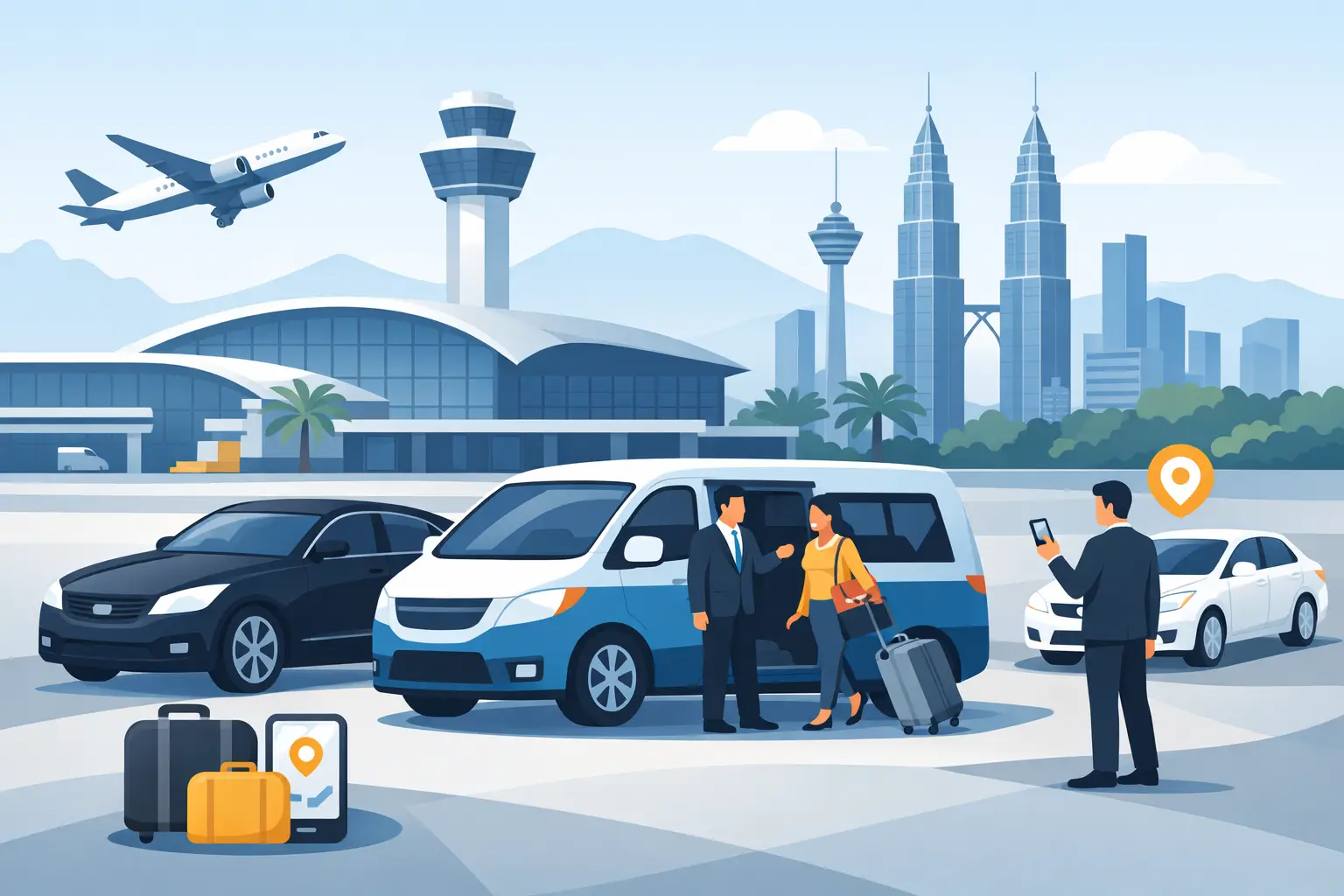
A late-night arrival used to mean one thing for many travelers - stand in line, compare fares, and hope the ride matched the luggage count. That is changing fast. Malaysia airport transfer trends now point toward pre-booked, fixed-rate transport that removes guesswork before the plane even lands.
For travelers arriving at KLIA or KLIA2, the shift is practical rather than flashy. People want to know who is picking them up, how much they will pay, and whether the vehicle will actually fit the group. That matters even more after a long-haul flight, an early morning landing, or a family trip with strollers and extra bags.
What is shaping Malaysia airport transfer trends
The biggest shift is predictability. Travelers are moving away from making airport transport decisions after arrival and instead arranging them in advance. This is happening across leisure trips, business travel, and group arrivals.
Part of that change comes from experience. Many passengers have dealt with fare uncertainty, wait times, or limited vehicle availability during peak hours. Once that happens a few times, pre-booking starts to feel less like an upgrade and more like basic trip planning.
Air travel recovery has also changed expectations. People now pay closer attention to timing, pickup coordination, and cancellation flexibility. Airport transfers are no longer treated as a minor detail. They are part of the arrival plan.
Fixed pricing is becoming a stronger deciding factor
Price transparency is one of the clearest trends in airport transport across Malaysia. Travelers want to see the fare before they commit. They do not want to calculate tolls, late-night surcharges, or peak-time pricing at the curb.
This matters for budget-conscious travelers, but it also matters for business travelers and families. A fixed rate makes expenses easier to manage and removes the small stress that often comes right after landing. When the total cost is confirmed early, the booking decision gets easier.
There is a trade-off, of course. On a very quiet travel day, an on-demand ride might occasionally look cheaper at first glance. But many travelers are deciding that fare certainty is worth more than the chance of a lower rate that may not hold during busy periods.
Flight tracking is now expected, not optional
A reliable airport transfer service used to mean showing up on time. Now it also means adjusting to the reality of air travel. Delays, early arrivals, and gate timing changes are common enough that passengers expect transport providers to monitor flights and respond accordingly.
That expectation is especially strong for international arrivals. After immigration and baggage claim, travelers want reassurance that their driver has not disappeared because the flight landed 40 minutes late. Real-time flight tracking reduces that concern and makes the pickup process much smoother.
For providers, this raises the standard. It is no longer enough to assign a vehicle and wait. Operations have to be organized around live arrival information, clear communication, and flexible dispatch.
Private transfers are gaining ground over improvised options
Another major development in Malaysia airport transfer trends is the rise of private, door-to-door service as the preferred option for travelers who value time and comfort. This is especially true for airport pickups heading to hotels, business districts, residential addresses, and intercity destinations.
The appeal is simple. A private transfer removes the need to renegotiate plans after arrival. There is no need to compare vehicle sizes, explain luggage requirements multiple times, or split a group into separate rides. For many passengers, that convenience outweighs any small price difference.
Families and small groups are booking larger vehicles more often
Vehicle choice is becoming a more important part of the booking decision. Travelers are paying closer attention to whether they need a sedan, MPV, premium car, or van rather than assuming any available car will work.
This is a meaningful shift. A family of five with checked bags has different needs than a solo traveler on a short business trip. Small groups arriving together often prefer a single van or MPV so everyone can travel at the same time. It keeps the trip organized and avoids the confusion of coordinating multiple vehicles.
That is one reason professionally managed fleets stand out. Matching the right vehicle to the passenger count, baggage volume, and route is a practical service advantage, not a minor detail.
Long-distance airport transfers are more common than before
Airport transfers in Malaysia are not limited to short rides into the city. More travelers are booking direct transport from the airport to places beyond the immediate urban center, including destinations used for meetings, family visits, or leisure stays.
For some passengers, that means landing at KLIA and heading straight to Malacca or Genting Highlands instead of staying overnight near the airport. Others arrive in Penang or Johor Bahru and want direct door-to-door transport without changing modes midway through the journey.
This trend reflects convenience, but also trust. Travelers are more willing to book longer private journeys when pricing is fixed and the route is handled by a professional driver. The longer the trip, the more valuable that certainty becomes.
Digital booking is raising service expectations
Airport transfer bookings are becoming more immediate and more information-driven. Travelers want instant confirmation, a clear service description, and pickup details they can rely on. If the booking process feels vague, many will keep looking.
This does not mean every passenger wants a complex app experience. In fact, many simply want a clean booking flow with the essentials handled properly - route, vehicle type, confirmed fare, timing, and contact information. Operational clarity matters more than extra features.
For transport companies, this changes what good service looks like before the ride even begins. A fast response, accurate confirmation, and clear instructions now shape customer trust just as much as the actual trip.
Airport transfer demand is splitting into two clear traveler types
One useful way to understand current demand is to look at who is booking and why. The first group is the traveler who wants certainty at all costs. This includes first-time visitors, families, and business passengers on a schedule. They typically prefer pre-booked private transport because the stakes are higher if something goes wrong.
The second group is the traveler who used to rely on on-demand rides but has become more selective. They may still compare options, but they increasingly pre-book when arriving late, traveling with others, or heading a longer distance. Their behavior is not about luxury. It is about reducing friction.
That distinction matters because it shows airport transfers are no longer a niche service used only for premium travel. They are becoming a practical default for more everyday trips.
What travelers should watch when booking
As the market grows, not every airport transfer option offers the same level of service. Travelers should pay attention to what is actually included in the booking. A low headline price can still leave open questions about waiting time, tolls, luggage handling, or flight delays.
It also helps to check whether the provider is structured for airport work specifically. Airport pickups require timing discipline, communication, and the ability to handle schedule changes. Those details are often what separate a dependable transfer from a stressful one.
This is where service design matters. A company such as Cab2Travel builds around fixed rates, airport coordination, and vehicle options for different trip types, which aligns closely with what many travelers now expect from a pre-booked transfer.
Where the market is likely heading next
The next phase of airport transport in Malaysia will likely be less about novelty and more about refinement. Travelers already know what they want: clear pricing, real pickup coordination, the right vehicle, and less uncertainty. Providers that deliver those basics consistently will continue to gain trust.
We are also likely to see more demand for integrated trip planning, where airport transfers connect naturally with intercity rides and day travel. That is a sensible fit for Malaysia, where many visitors combine urban arrivals with regional destinations in a single trip.
The broader point is straightforward. Airport transport is no longer just the ride after the flight. It is the first real test of how organized the rest of the trip will feel. When that first leg is handled well, everything after it gets easier.
If you are planning travel in Malaysia, the smartest move is often the simplest one - book the transfer before arrival, choose the vehicle based on the actual trip, and favor certainty over improvisation.